
Kitab Markaz
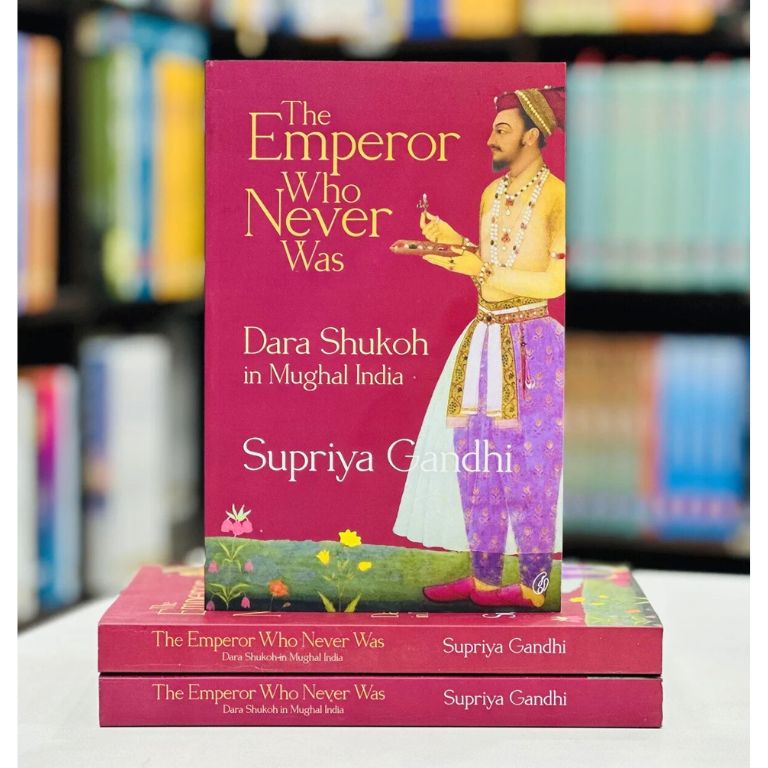
The Emperor Who Never Was: Dara Shukoh in Mughal India
The Emperor Who Never Was: Dara Shukoh in Mughal India
Couldn't load pickup availability
What if the Mughal Empire had taken a different path?
It's one of the great "what ifs" of South Asian history. Shah Jahan - the emperor who gave us the Taj Mahal - had four sons. The eldest, Dara Shukoh, was his father's favorite and the presumed heir. But the Mughals didn't follow primogeniture. The throne went to the strongest, not the firstborn. And in the bloody war of succession that followed, the strongest was Aurangzeb.
Dara lost. His brothers lost their lives. Their father lost his freedom, imprisoned in Agra Fort with a view of the monument he built for his beloved wife. And the Mughal Empire lost something harder to measure - a ruler who might have governed very differently.
The Emperor Who Never Was is Supriya Gandhi's masterful reconstruction of the prince who almost was. Drawing on archival sources in Persian and other languages, she pulls Dara out of the shadows of myth and gives us something rarer: a human being.
Who was Dara Shukoh, really?
Not just the tragic figure of legend. Not just the "good" brother to Aurangzeb's "bad." He was a Sufi who dove deep into Hindu thought, convinced that the Upanishads concealed the same truths as the Quran. He translated fifty Upanishads into Persian, calling them the Sirr-i-Akbar - the Great Secret. He surrounded himself with Hindu ascetics and Muslim mystics, searching for common ground in an age that increasingly demanded division.
But he was also a prince who inherited his family's ambition. A man who wrote poetry, collected paintings, and navigated the treacherous currents of the Mughal court. A brother to Jahanara Begum, the brilliant sister who stayed loyal to him until the end. A husband and father who watched his world collapse when the armies met at Samugarh in 1658.
Gandhi doesn't romanticize Dara. She doesn't need to. The facts speak loudly enough: a man born to rule, shaped by ideas, undone by politics. His death at Aurangzeb's command cleared the path for a very different kind of Mughal Empire - one that moved away from the pluralism Dara represented.
For the Pakistani reader interested in history, this book is essential. It gives you the texture of the court, the weight of the decisions, the personalities behind the names you learned in school. You'll understand why Dara still matters - not just as a symbol, but as a person who stood at a crossroads and chose a direction India never got to follow.
Supriya Gandhi teaches at Yale. Her scholarship is meticulous, but her writing carries you like a novel. You'll finish this book with a new appreciation for how fragile history really is - how much depends on who wins on a given day.
The Emperor Who Never Was is available now at Kitab Markaz. We deliver across Pakistan - so this story of our shared past can reach you wherever you are.
Format: Paperback
Shipping & Returns
Shipping & Returns
Delivery all over Pakistan, Delivery time 4-5 days maximum, if you require any further questions or help your can contact us 0323-4400940
