Kitab Markaz
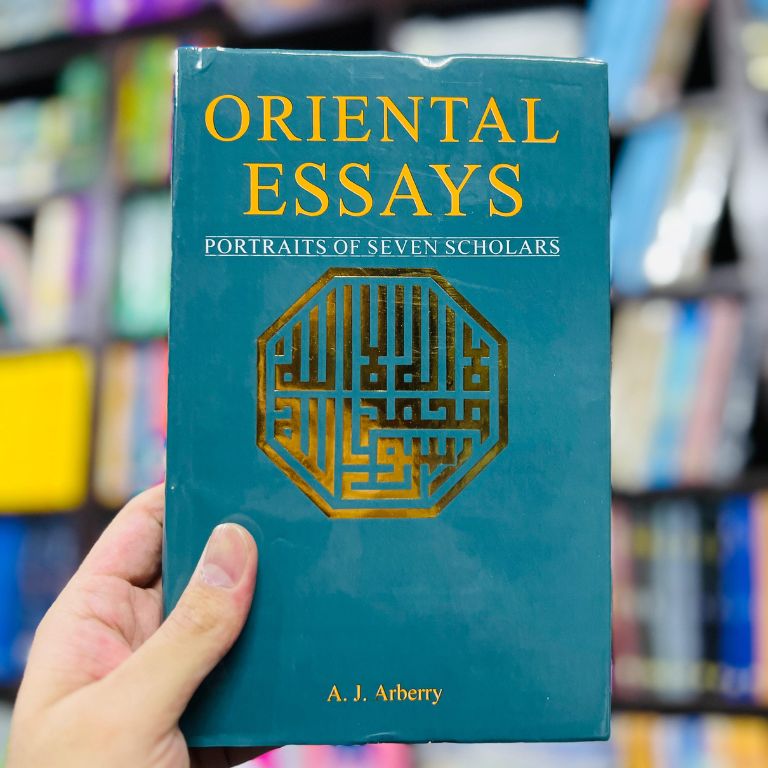
ORIENTAL ESSAYS - Portraits of Seven Scholars
ORIENTAL ESSAYS - Portraits of Seven Scholars
Couldn't load pickup availability
ORIENTAL ESSAYS: The Pioneering Scholars Who Built Bridges Between East and West
Before "globalization" became a buzzword, a handful of dedicated English scholars devoted their lives to understanding Asian cultures, languages, and thought. "Oriental Essays: Portraits of Seven Scholars" by A.J. Arberry - himself one of the 20th century's greatest Orientalists - offers intimate biographical sketches of the pioneers who laid the foundations for Eastern studies in the West.
For Pakistani readers interested in how the Islamic world was studied, interpreted, and sometimes misunderstood by Western academia, this collection provides essential historical context. These aren't dry academic biographies but human portraits of scholars whose work still influences how Asia is perceived in the West today.
Why These Portraits Matter for Understanding East-West Relations:
For Students of Post-Colonial Studies: Understand the intellectual foundations of Orientalism - both its valuable contributions and its problematic assumptions.
For Scholars of Islamic & Asian Studies: Learn about the predecessors who created your field, their methodologies, and their lasting impacts.
For Historians of Ideas: Trace how knowledge about Asia traveled to Europe through specific individuals with specific biases and breakthroughs.
For Anyone Interested in Cultural Translation: See how language mastery, cultural immersion, and personal dedication built bridges across civilizational divides.
Meet the Seven Bridge-Builders:
While Arberry deliberately focuses on scholars in his own specialization, these portraits typically include key figures such as:
1. Sir William Jones (1746-1794): The founder of the Asiatic Society who identified the Indo-European language family and introduced Sanskrit to the West.
2. Edward William Lane (1801-1876): Whose "Manners and Customs of the Modern Egyptians" became the definitive Western account of 19th-century Egyptian society.
3. Reynold A. Nicholson (1868-1945): The Cambridge scholar whose translations of Rumi and other Sufi poets introduced Islamic mysticism to English readers.
4. Arthur J. Arberry (1905-1969): The author's revealing self-portrait - a rare glimpse into the mind of a scholar reflecting on his own life's work.
5-7. Other Specialized Scholars from Arberry's immediate academic circle whose contributions, while less known publicly, advanced specific areas of Arabic, Persian, or Islamic studies.
What Makes Arberry's Approach Unique:
Insider Perspective: As a leading Orientalist himself, Arberry writes with personal knowledge of the challenges, triumphs, and idiosyncrasies of scholarly life.
Balanced Assessment: Neither hagiography nor critique, these portraits acknowledge both achievements and limitations.
Humanizing Focus: Beyond their scholarly output, we meet the individuals—their personalities, motivations, and personal struggles.
Historical Context: Each portrait situates the scholar within their historical moment, showing how politics, institutions, and personal circumstances shaped their work.
About the Author: Why Arberry Was Uniquely Qualified
A.J. (Arthur John) Arberry (1905-1969) wasn't just writing about Orientalists—he was one of the most influential:
- Cambridge Professor of Arabic and leading authority on Persian and Islamic literature
- Renowned Translator of the Quran, Rumi's poetry, and other Islamic classics
- Prodigious Scholar with over 100 publications bridging academic and popular understanding
- Cultural Ambassador whose work introduced generations of Western readers to Islamic spirituality
His dual perspective - as scholar of Orientalism and practitioner of Oriental studies—makes these portraits particularly nuanced and authoritative.
Why Pakistani Readers Should Engage with This History:
Understanding Orientalism isn't just academic - it's crucial for:
- Decoding Western Perceptions: Recognizing how historical scholarship still influences contemporary views of Pakistan and Islam
- Appreciating Translation Heritage: Many texts Pakistanis study were first translated by these Orientalists
- Navigating Post-Colonial Identity: Understanding the complex legacy of Western scholarship on Eastern self-perception
- Continuing the Bridge-Building: Learning from both the achievements and mistakes of cross-cultural scholarship
Key Themes Explored in These Essays:
- The personal sacrifices behind scholarly achievements
- How individual personalities shaped entire academic fields
- The tension between genuine appreciation and colonial mindset
- The evolution of Oriental studies from amateur pursuit to academic discipline
- The role of institutions (museums, universities, societies) in facilitating East-West exchange
Arberry's Final Reflections:
In the concluding chapter - essentially his intellectual autobiography - Arberry:
- Explains his own motivations for becoming an Orientalist
- Defends the value of specialized humanistic scholarship in an increasingly utilitarian world
- Offers predictions about the future of Eastern studies
- Reflects on what constitutes meaningful cross-cultural understanding
Perfect For:
- University Students in history, literature, or Islamic studies programs
- Academic Researchers studying the history of Orientalism or specific scholars
- Translators & Interpreters interested in the pioneers of their craft
- Diplomats & Cultural Attachés working in East-West relations
- General Readers fascinated by intellectual biography and cultural history
- Pakistani Scholars examining how their heritage has been studied abroad
Critical Insights You'll Gain:
- How the personal backgrounds of scholars influenced their interpretations of Eastern cultures
- Why some Orientalist work remains valuable while other aspects have been rightly criticized
- The difference between colonial-era Orientalism and genuine cross-cultural scholarship
- How to critically engage with Western scholarship about the East
- The human stories behind the academic titles and publications
Premium Hardcover Edition:
- Complete collection of all seven portraits plus autobiographical conclusion
- High-quality binding for a volume meant for reference and rereading
- Clear presentation with appropriate scholarly apparatus
- A work that complements Arberry's better-known translations with his biographical scholarship
Praise for Arberry's Approach:
"Arberry writes with the affection of a colleague and the clarity of a historian. These portraits illuminate not just individuals but an entire scholarly epoch." - Journal of Asian Studies
"Essential reading for understanding how the West came to know - and sometimes misunderstand - the East." - Middle Eastern Literature
More Than Biography - Intellectual Archaeology:
This book helps you excavate the layers of East-West encounter. Each portrait reveals:
- Personal Motivations: Why these individuals devoted their lives to studying distant cultures
- Methodological Innovations: How they developed new approaches to understanding unfamiliar texts and traditions
- Cultural Impacts: How their work influenced Western perceptions and Eastern self-understanding
- Enduring Legacies: What remains valuable in their scholarship today
Why This Collection Remains Relevant:
In an age of renewed civilizational tensions, understanding the history of cross-cultural scholarship helps us:
- Recognize that current debates have long histories
- Appreciate genuine bridge-building while remaining critical of cultural appropriation
- Learn from both the successes and failures of earlier attempts at mutual understanding
- Value specialized knowledge in an age of superficial multiculturalism
Order Your Copy Today:
We deliver throughout Pakistan to universities, libraries, and individual readers. This collection belongs on the shelf of anyone seriously interested in the history of ideas, East-West relations, or the development of Islamic and Asian studies.
Shipping & Returns
Shipping & Returns
Delivery all over Pakistan, Delivery time 4-5 days maximum, if you require any further questions or help your can contact us 0323-4400940
