
Kitab Markaz
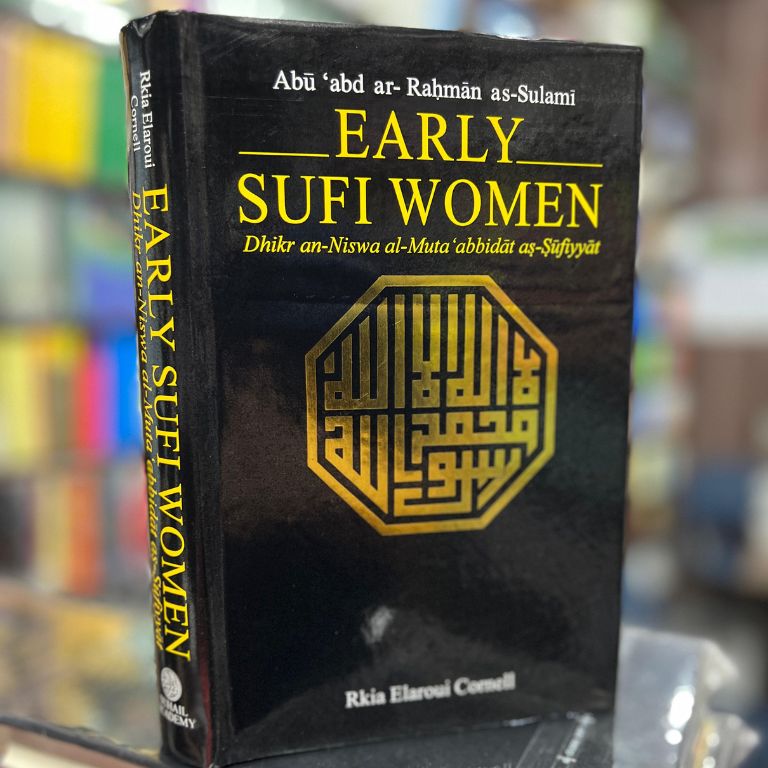
Early Sufi Women
Early Sufi Women
Couldn't load pickup availability
Were there women saints in early Islam? Did the mystical tradition of Sufism include women as teachers, guides, and spiritual masters? This book answers with a resounding yes - through the voices of 84 women who walked the path of devotion, and the 11th‑century master who preserved their memory.
Early Sufi Women is the English translation of a long‑lost classical work: the Dhikr an-Niswa al-Mutaʿabbidāt aṣ-Ṣūfiyyāt (Remembrance of the Devout Sufi Women) by Abū ʿAbd al-Raḥmān as-Sulamī (d. 412/1021). Until 1991, scholars believed this text had perished. Then a unique manuscript - copied in 1084, only sixty‑three years after Sulami’s death - was discovered in Riyadh, Saudi Arabia. It is one of the earliest surviving manuscripts of Sulami’s works and the earliest known collection of Sufi women’s biographies in Islamic literature.
The work contains notices on eighty‑four women, ranging from the companions of the Prophet to the great mystics of the 4th/10th century. Among them are famous figures like Rābiʿa al-ʿAdawiyya and lesser‑known women who were teachers of renowned male Sufis, spiritual guides in their own right, and exemplars of asceticism and divine love. Each entry typically includes the woman’s name, her teachers and students, and sayings or anecdotes that reveal her spiritual station.
Sulami’s collection provides a picture of independent female spirituality in Islam that challenges long‑held myths about women’s roles in Muslim societies. It shows that women were not merely followers but active participants - and often leaders - in the Sufi tradition from its earliest days.
Why We Love It:
At Kitab Markaz, we celebrate books that recover lost voices - and Early Sufi Women does exactly that. For centuries, the story of Islam’s spiritual heritage has been told largely through male figures, not because women were absent, but because their presence was erased. Sulami’s manuscript, rediscovered in our own time, restores those voices. Rkia Cornell’s meticulous translation and annotation make this treasure accessible without losing its historical weight. We love this book because it doesn’t argue for women’s spiritual authority - it simply documents it, and the evidence is overwhelming. It is essential reading for anyone interested in Sufism, women’s studies, or the hidden dimensions of Islamic history.
About the Author and Translator:
Abū ʿAbd al-Raḥmān as-Sulamī (d. 412/1021) was a major Sufi master, historian, and Qur’ān commentator from Nishapur, one of the great intellectual centers of the Islamic world. He authored dozens of works on Sufism, including the Ṭabaqāt aṣ-Ṣūfiyya (Generations of the Sufis), a foundational biographical dictionary. His writings shaped the tradition for centuries.
Rkia Elaroui Cornell is Associate Professor of Middle East Studies and History at the University of Texas at Austin. A specialist in Sufism, Islamic gender studies, and classical Arabic literature, she has devoted years to the study of Sulami’s works. Her translation of Early Sufi Women is the result of meticulous scholarship and a deep sensitivity to the spiritual content of the text.
Early Sufi Women: Dhikr an-Niswa al-Mutaʿabbidāt aṣ-Ṣūfiyyāt is available now at Kitab Markaz. We deliver across Pakistan and worldwide - so these long‑silent voices of female sanctity can reach you, wherever you are.
Shipping & Returns
Shipping & Returns
Delivery all over Pakistan, Delivery time 4-5 days maximum, if you require any further questions or help your can contact us 0323-4400940